Low Iron: Why Just Taking a Supplement Isn’t the Answer
If you’ve ever been told you’re low in iron, chances are your doctor suggested taking an iron supplement.
And while that might seem like a simple fix, from a Functional Diagnostic Nutrition (FDN) perspective, low iron is rarely just about not getting enough iron.
Iron deficiency is a symptom, not a root cause — and unless we identify why your body isn’t maintaining healthy iron levels, you can end up in a frustrating cycle of fatigue, poor focus, and lingering low ferritin that never really improves.
1. Iron Needs More Than Iron
Iron doesn’t work in isolation. It depends on several other nutrients for proper absorption and transport:
Copper — needed to move iron out of storage and into circulation via the enzyme ceruloplasmin.
Vitamin A — helps mobilize stored iron from the liver.
Vitamin C — enhances non-heme (plant-based) iron absorption.
B vitamins — support the production of red blood cells.
When any of these are out of balance, your body may have iron but can’t use it properly — a condition known as a functional iron deficiency.
2. The Mineral Balance Connection
As FDNs, we look at minerals as the foundation of metabolism. On a Hair Tissue Mineral Analysis (HTMA), we often see patterns that reveal why iron is dysregulated:
High calcium and low potassium can slow metabolism, reducing iron uptake.
Copper deficiency or imbalance leads to “bio-unavailable” iron — iron gets stuck in storage instead of being transported where it’s needed.
High metals (like aluminum, lead, or mercury) can interfere with iron utilization.
In other words, the problem might not be that you don’t have enough iron — it might be that your body isn’t managing it properly due to stress, mineral imbalance, or toxicity.
3. The Role of the Gut
A healthy gut lining is essential for absorbing iron — and many FDN clients have underlying digestive stress that blocks this process:
Low stomach acid prevents iron absorption (especially from animal protein).
Gut infections or dysbiosis (like H. pylori, parasites, or yeast overgrowth) can steal nutrients or create inflammation that impairs absorption.
Food sensitivities or leaky gut can further aggravate nutrient loss.
Simply taking an iron supplement without addressing these underlying digestive issues can make things worse — leading to constipation, dark stools, or an imbalance of other minerals like zinc and copper.
4. Stress and the Iron Trap
Chronic stress impacts everything, including how your body uses iron.
High cortisol depletes key minerals like magnesium and copper, and can trigger an inflammatory response that traps iron in storage (a pattern sometimes seen as anemia of chronic disease).
So if you’re pushing through fatigue, skipping meals, or burning the candle at both ends, your body may be signaling a need for stress regulation, not just more iron.
5. The FDN Approach to Low Iron
Instead of guessing, we test — and we look at the whole picture:
HTMA (Hair Tissue Mineral Analysis) to assess mineral ratios, copper status, and stress patterns.
GI-MAP or stool testing to look for pathogens, inflammation, or low digestive function.
Comprehensive blood chemistry to see how the body is using iron (ferritin, transferrin saturation, hemoglobin, etc.).
Then, we support the body through the D.R.E.S.S. protocol — Diet, Rest, Exercise, Stress reduction, and Supplementation — targeting the real root causes rather than patching symptoms.
6. What to Do Instead of Grabbing an Iron Pill
If you suspect low iron, here’s what to consider first:
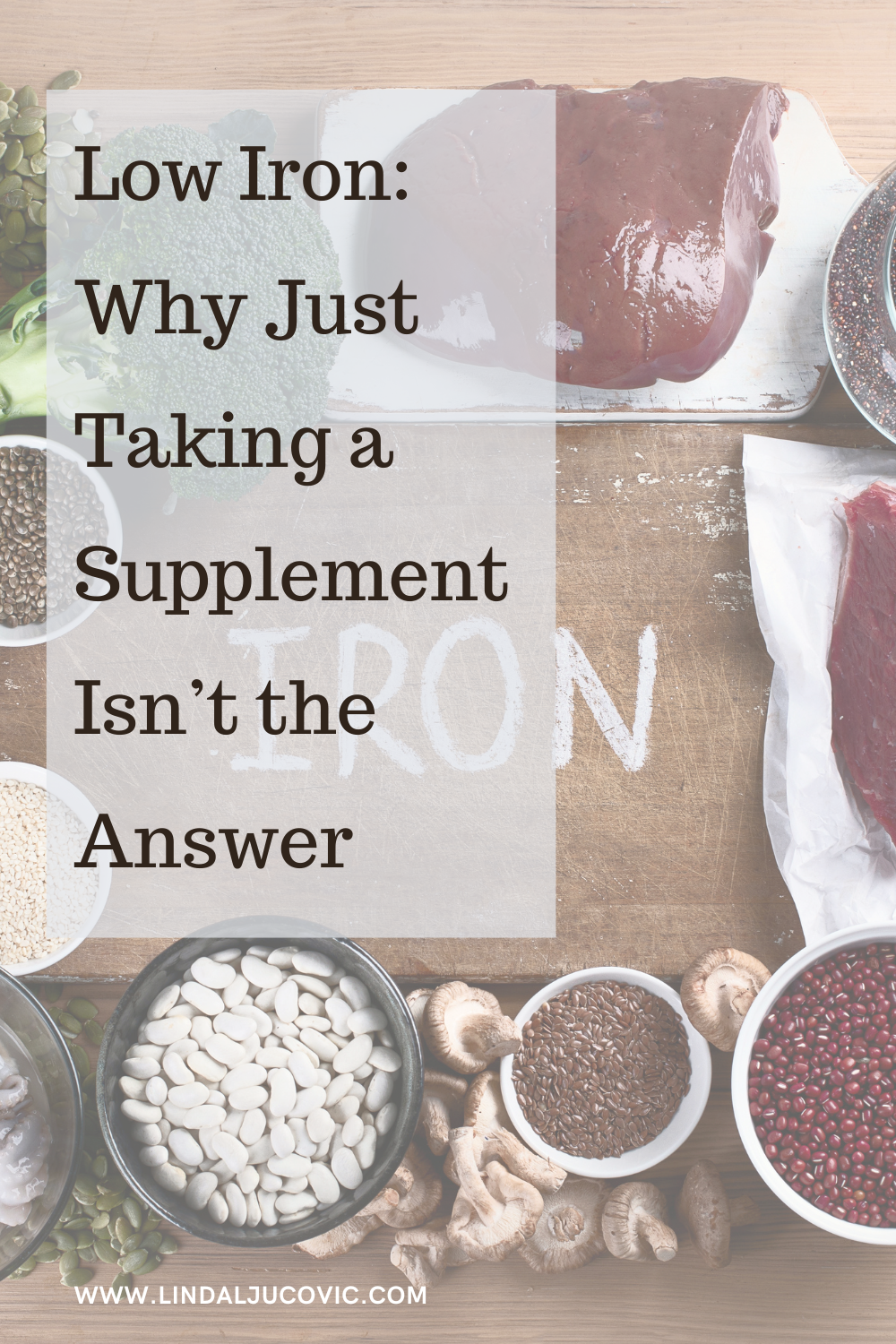
Eat iron-rich foods from both animal (grass-fed beef, liver, sardines) and plant sources (lentils, spinach, pumpkin seeds).
Pair foods wisely — vitamin C-rich foods with iron, avoid drinking coffee or tea with meals.
Assess digestion — low stomach acid is common and needs to be corrected for proper absorption.
Check mineral balance before supplementing — especially copper, zinc, and magnesium.
Manage stress — your adrenals and mineral system are deeply connected.
The Bottom Line
If you’ve been taking iron but your energy hasn’t improved, it’s time to dig deeper.
Low iron isn’t just about what’s missing in your diet — it’s about how your body is functioning as a system.
By restoring balance through proper testing, mineral support, and stress management, you can finally get to the root of fatigue and stop chasing symptoms.
Want to know more?
This is exactly the kind of thing we uncover in my Fix Your Hormones & Fight Fatigue program and through mineral testing (HTMA).
If you’ve been told you’re “anemic” or “just need more iron,” let’s look at the real reason your body can’t keep up.
👉 Take my free hormone and energy quiz to get started.